
 English
 русский
 Español
 عربى
 中文简体

Știri
Acasă / Știri / Știri din industrie / How Deep to Bury Ethernet Cable: Trench Depth, Conduit, and Fiber Rules

A trench that is six inches too shallow does not fail on the day you dig it. It fails two summers later, when a lawn aerator, a rototiller, or a loaded trailer crosses the run and a 1 Gbps link drops to nothing. For a direct-buried copper Ethernet cable, plan on 18 to 24 inches (450 to 600 mm) of cover, and treat conduit as protection for the cable rather than a reason to dig less.
Most residential and light commercial installs land at 18 inches under turf and 24 inches under anything a vehicle can cross. That range meets the usual reading of NEC Article 300.5, which sets 24 inches as the baseline cover for direct-buried cables and allows less only in narrowly defined cases.
Two clarifications keep a project out of trouble:
Where code and local practice disagree, the inspector wins. Confirm the requirement before the trencher arrives, not after the sod goes back down.
The governing number is set by what rolls across the ground, not by the jacket on the cable. Traffic load, surface type, and the risk of future excavation drive the depth far more than the conductor count does.
| Surface above the run | Minimum cover | Practical note |
| Open turf or garden bed | 18 in with conduit, 24 in direct buried | Core aeration reaches 3 to 4 in and should never touch the cable |
| Residential driveway or parking pad | 24 in | Add a sleeve where the line crosses an expansion joint |
| Sidewalk or slab poured over the run | 12 in | The slab must be continuous, with no joint directly above the cable |
| Farm lane, alley, or public road | 36 in in rigid steel conduit | Assume loaded trucks and periodic road maintenance |
| Bedrock or ledge | 6 in with concrete encasement | Encasement spreads point loads that rock would concentrate |
Add margin for what is invisible at dig time. A 24-inch trench in an unpaved side yard can become a 20-inch trench after one load of gravel and a grading pass, so measure from finished grade rather than from the surface on the day of excavation.
Conduit does not let a crew dig shallower, but it does let them re-pull a failed or obsolete cable without opening the ground again. On almost any run under a lawn, that single difference justifies the added cost.
Sizing and fittings decide whether the conduit is usable in five years:
Direct burial
Rigid conduit
An Ethernet channel is limited to 100 meters (328 ft) end to end, and that budget includes both patch cords. If the outbuilding sits more than about 90 meters of trench away, fiber is the only option that stays reliable at full speed.
Depth cannot fix distance. A flawless 140-meter copper run either negotiates at a reduced rate or fails to link at all, no matter how carefully it was bedded. Fiber also removes two other underground problems at once: ground potential difference between separate buildings, and the lightning path a metallic conductor creates.
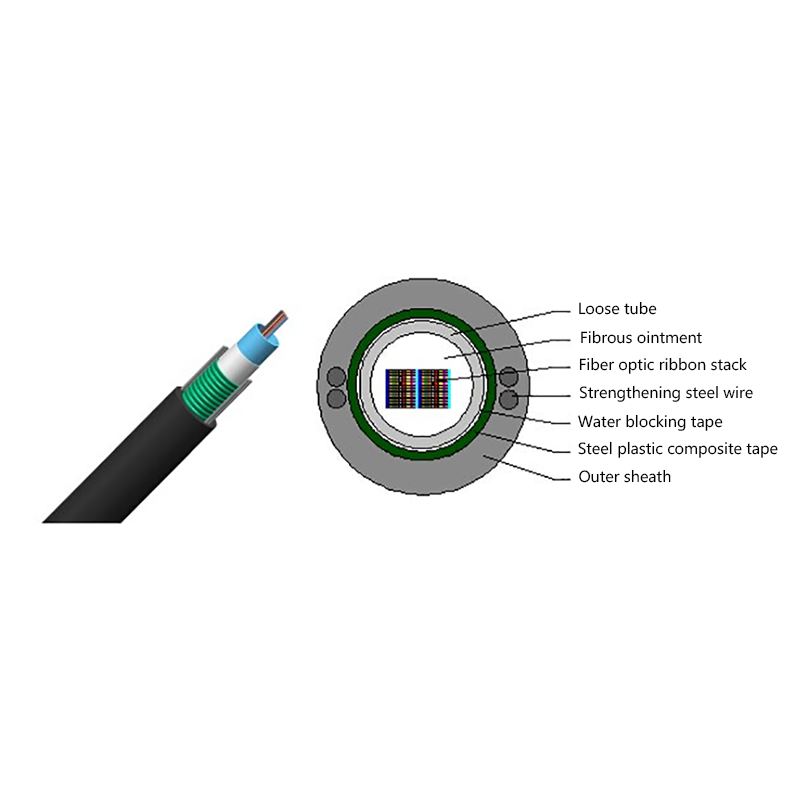
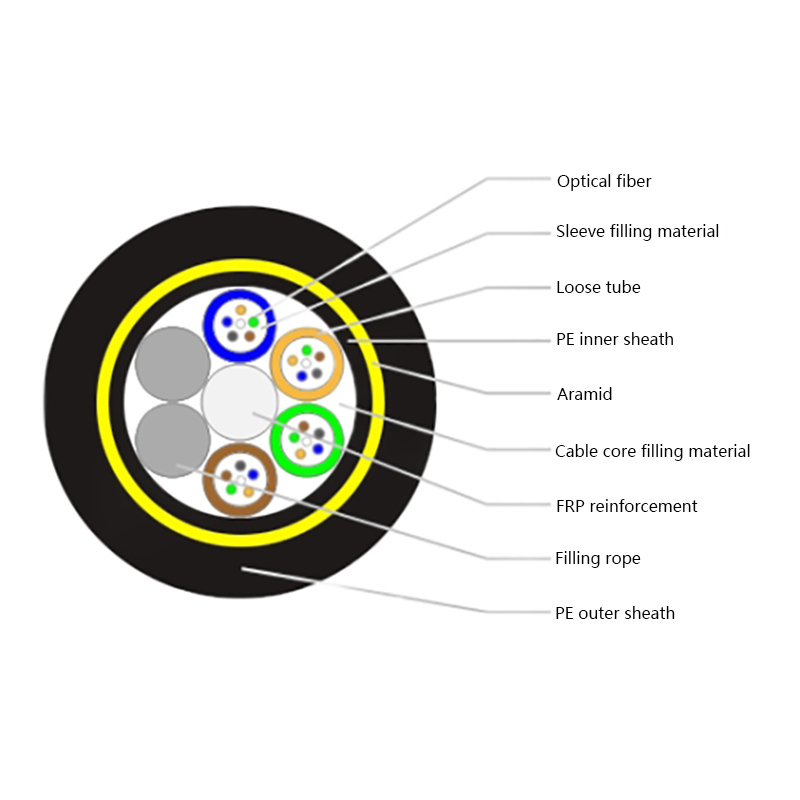
For a garage, workshop, or gatehouse a few hundred meters away, an armored central tube cable such as GYXTW is the usual direct-burial choice, because the corrugated steel tape takes point loads that a soft jacket cannot.
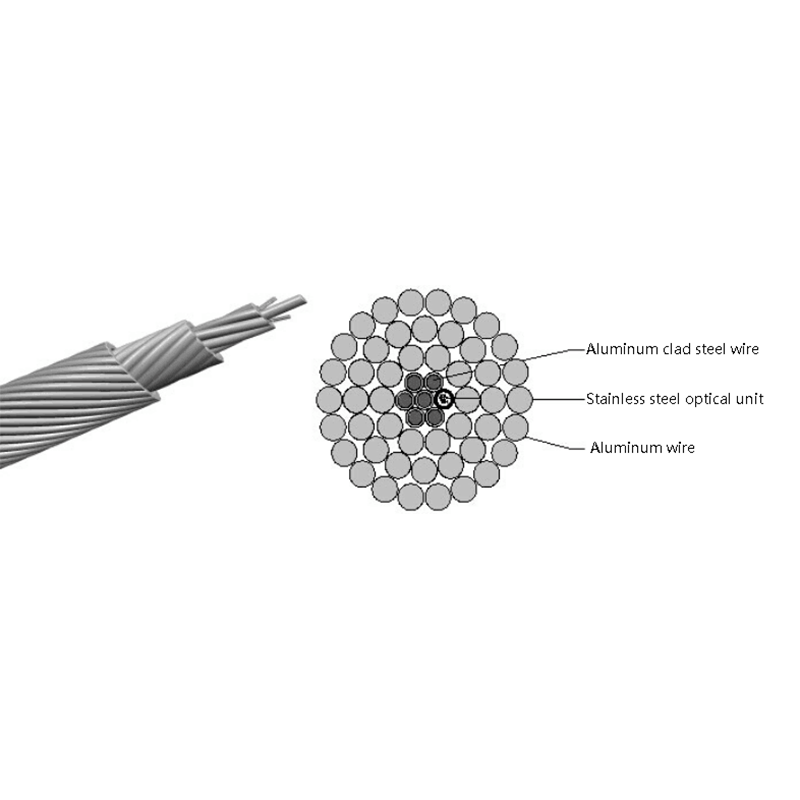 GYXTW Central Tube Armored Outdoor Fiber CableFor short direct-burial runs to outbuildings, this central tube cable uses corrugated steel tape armoring and parallel steel wires for point-load resistance.View Product →
Splice counts and real-world reach are covered in this guide to fiber optic cable distance limits, which is worth reading before the trench is staked out.
Six steps decide whether the run survives its first decade, and all of them happen before the backfill.
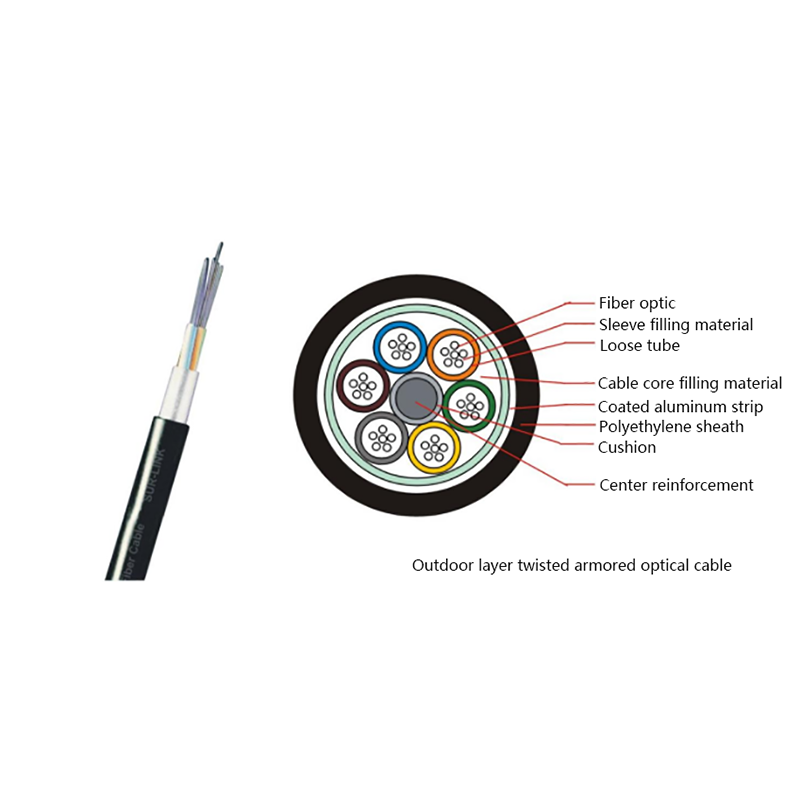
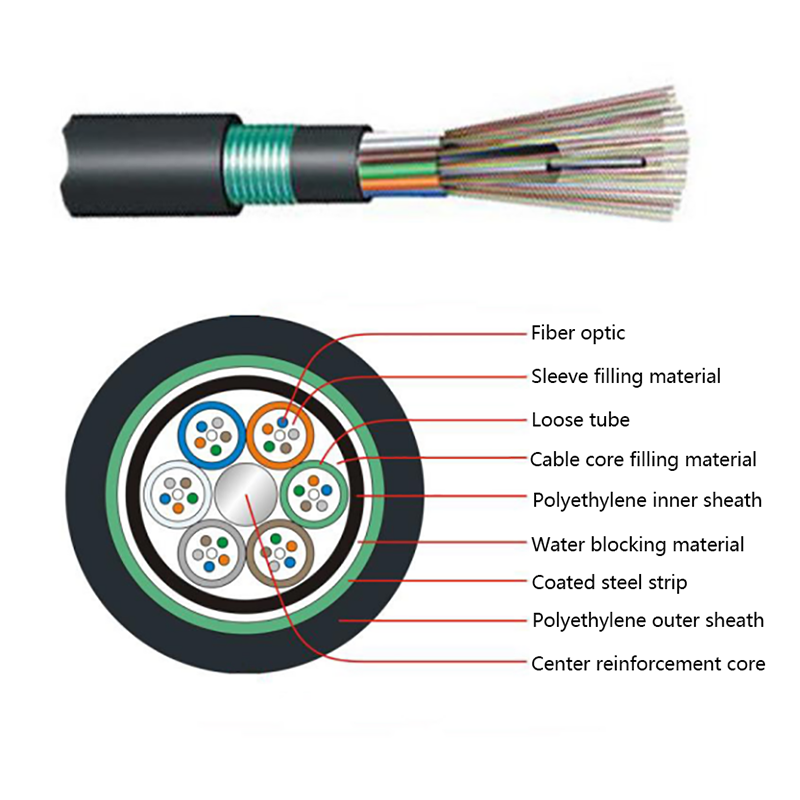
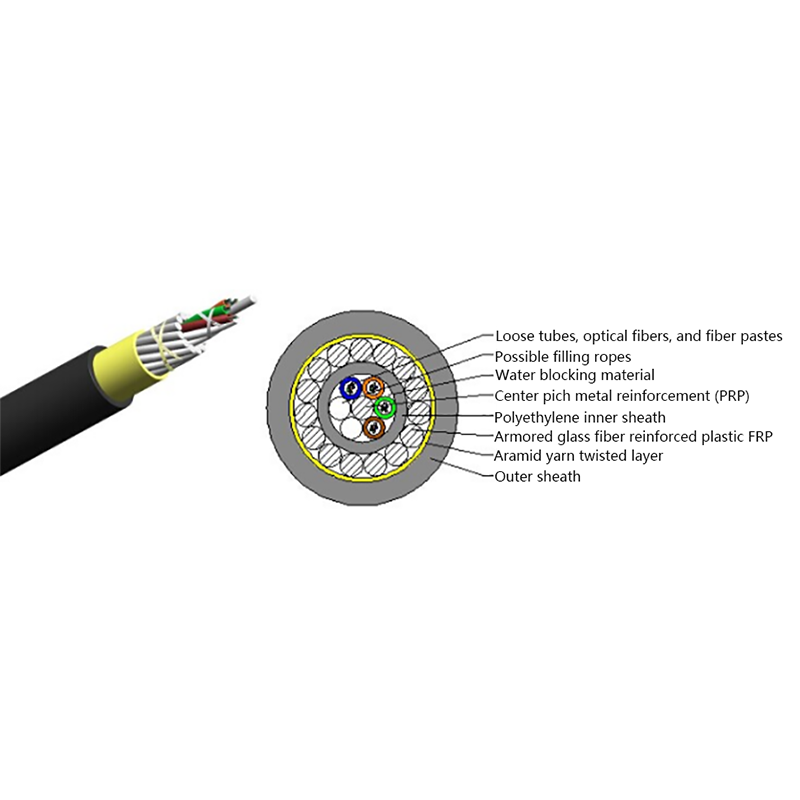
Long runs across open ground usually call for a layer-stranded armored cable such as GYTA53, where the bonded steel tape and outer sheath handle direct burial and rodent pressure better than a thin central tube design.
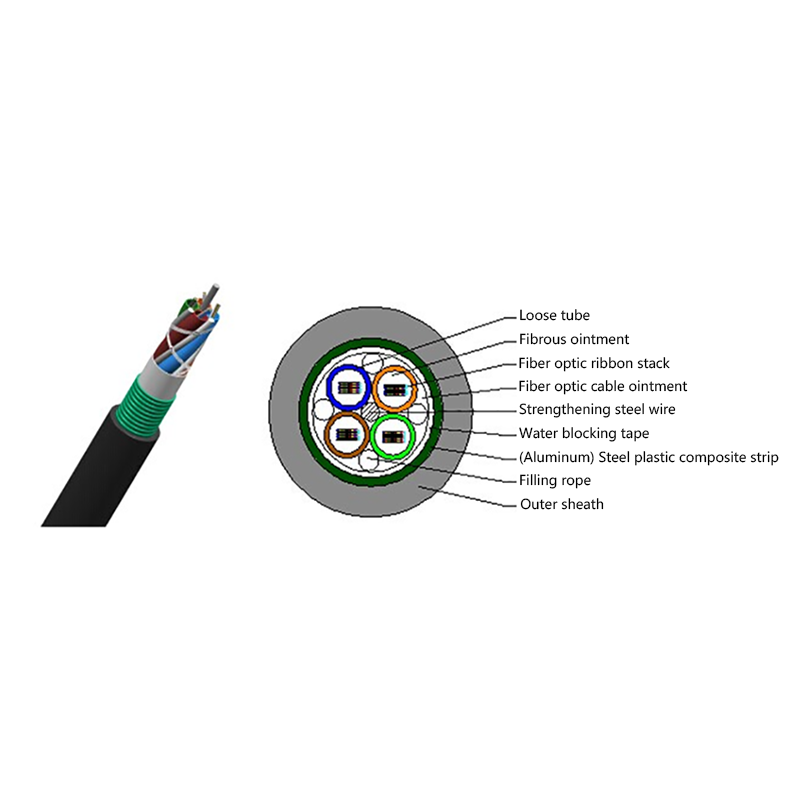 GYTA53 Layer-Stranded Steel Tape Armored Outdoor CableFor long open-ground direct-burial runs, the layer-stranded GYTA53 combines bonded steel tape armor and a double sheath for pressure and rodent resistance.View Product →
Depth is the baseline control. Site conditions determine what else the cable needs to survive the same ten years.
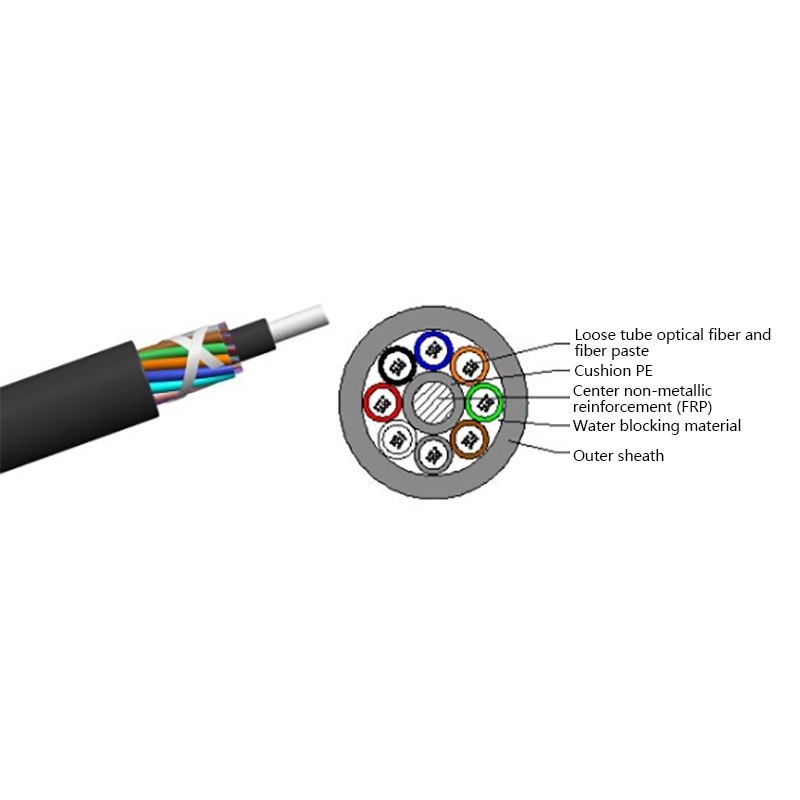
In high-field or lightning-prone sites, a nonmetallic outdoor cable removes the metallic path entirely and simplifies bonding.
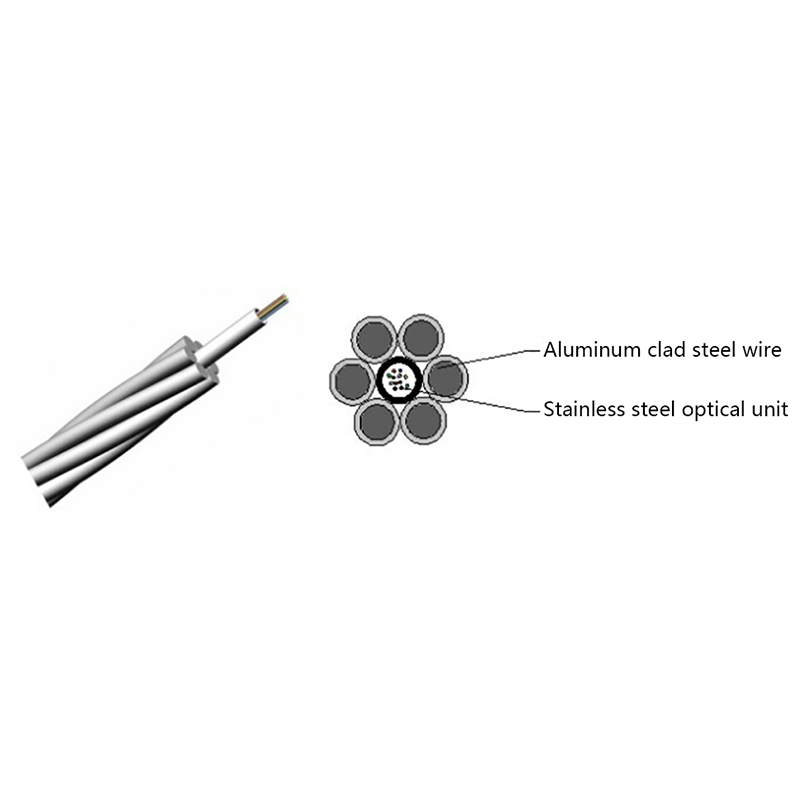 Non-Metallic All-Dielectric Outdoor Fiber Optic CableIn lightning-prone or high-field sites, this all-dielectric cable uses an FRP central strength member and no metal components to avoid a metallic path.View Product →
18 inches under turf and 24 inches under any surface a vehicle can cross. The conduit protects the cable and allows a future re-pull, but it does not reduce the cover requirement.
Yes, if the cable is an outdoor, gel-filled design with a polyethylene jacket rated for direct burial. Bury it at 24 inches, bed it in sand, and accept that the cable cannot be replaced without digging.
Not for signal performance, since freezing ground does not disturb a copper pair. It matters for physical stability: where frost is severe, buried conduit can heave, so deeper cover or slip provision prevents the cable from being stretched.
100 meters (328 ft) per channel, including patch cords at both ends. Beyond roughly 90 meters of trench, switch to fiber rather than adding a mid-run repeater in a buried box.
Solicitați un apel astăzi